
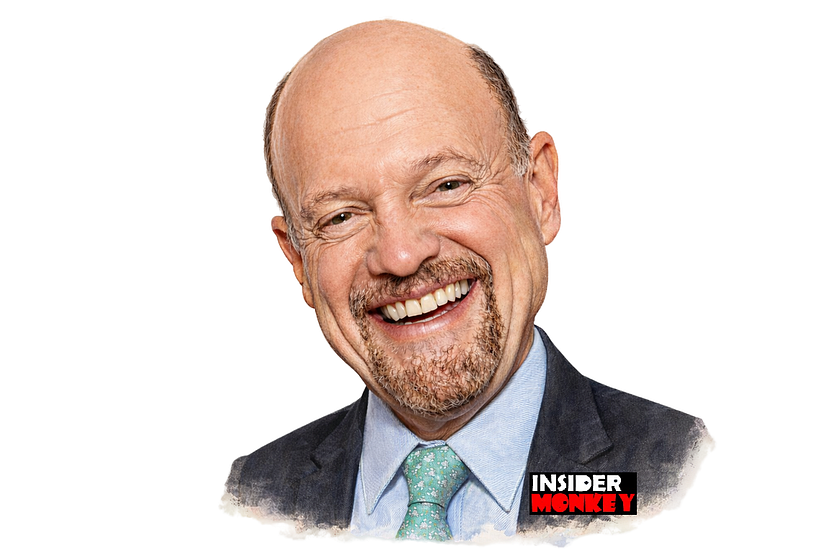
When a caller asked whether SoFi Technologies, Inc. (NASDAQ:SOFI) was a broken stock or a broken company during the October 5 episode of Mad Money, Jim Cramer distinguished between its business and share-price performance:
I think you’re right. Look, it’s down 40% for the year. It is sitting almost at its low. It’s got earnings. I mean, it’s not like it’s sitting there losing money. Anthony Noto is doing a good job. It’s been a terrible stock. Now, the fact it’s been a terrible stock for a long time does not make it a terrible company. And I do think that I think it can bounce. It’s just, the problem is, as we see with so many different cases, when rates are going higher, and you have a 26 PE on a stock, in other words, a price-to-earnings multiple above the market multiple, it tends not to do well. And that’s exactly what really is happening with SoFi.
During the September 10 episode of Mad Money, Cramer said that the stock is a long-term buy but highlighted an important factor to consider.
Revenue Growth Extends Beyond Lending
SoFi was once a private fintech looking for a route to the public markets. What happened after that transition is a very different story from the one its SPAC origins might suggest. SoFi Technologies, Inc. reported second-quarter total revenue of approximately $1.22 billion, up 43% year over year, and net income of $156.6 million. Membership increased 35% to 15.8 million, providing further evidence that the platform continued to attract customers despite the stock’s weakness. Does the increased revenue justify its premium valuation?
Additionally, fee-based revenue reached $472.3 million, representing approximately 39% of total revenue. The growing contribution offers a source of income beyond interest earned on loans, although lending remains an important part of the business. Personal-loan originations increased 54% to approximately $10.72 billion. These results support Cramer’s comment that declining shares do not automatically mean the core operation is shrinking or losing money.
Credit Performance and a Remaining Valuation Premium
Rapid loan growth also increases the importance of credit quality. SoFi Technologies, Inc. reported a 2.62% annualized personal-loan net charge-off rate, while its estimated all-in rate excluding the effect of selling late-stage delinquent loans was approximately 3.7%. The measures use different treatments and should not be presented interchangeably.
The latest valuation snapshot put SoFi at approximately 21.7x forward earnings, below the 26x figure Cramer referenced but above Nu Holdings at approximately 16.1x. Nu operates primarily in Latin America, making it an imperfect comparison, but the gap shows that SoFi still sells at a premium to another growing digital financial-services business. That premium requires more than membership growth. Investors also need confidence that expanding lending volumes will produce durable profits after credit losses and funding costs.
Fewer Hedge Fund Holders, Elevated Short Interest
Insider Monkey recorded 44 hedge funds with positions in SoFi Technologies, Inc. in the second quarter, down from 47 in the first. Among the elite hedge funds tracked by Insider Monkey, D E Shaw was the company’s largest shareholder despite reducing its position in the company by 66% to roughly 14.7 million shares in Q2. Short interest stood at 14.83% of the float. The ownership decline was limited, but the relatively large short position shows that a meaningful group of investors remains positioned for further weakness. It can also contribute to sharp price moves when results differ from expectations.
SoFi’s latest results give Cramer a reasonable basis for separating the company from its stock. Revenue and membership are growing, and the business is profitable. However, a lasting recovery in the shares needs investors to believe that those profits can keep growing without a deterioration in loan performance.
READ NEXT: Jim Cramer Makes His Feelings About Taiwan Semiconductor (TSM) Clear and Jim Cramer Believes META Muse Will “Have Much More Market Share Than OpenAI”.


