There was a long time when entrepreneurship wasn’t really considered to be a very viable option for the vast majority of people in the world. Only the upper class people could consider going into business on their own, while the middle class and the lower class would work 9 to 5 jobs, and then go home to their families. However, nowadays, more and more people are fed up of the normal office job life and it’s easy to see why. At least when you’re in public service such as a police officer or a doctor, you are actually making a difference and helping to improve the world and improve the lives of people as well. But when you’re simply in a normal job for the corporation, all you’re doing is taking home a meagre salary and actually helping the corporation make all the money, which is why many people are much more interested in starting their business.
When you start your own business, you need investment from people. Even this part is becoming much easier thanks to funding websites which allow you to ask for investment by people into your product, as well as the improvement in globalization. And of course, when you start your own business, then you want it to grow and grow and become huge, earning you a windfall as your company becomes world famous. However, there is a certain threshold after which the company cannot continue to grow, not because it has reached its peak, but because it is gaining too much power and influence and disrupting the flow of a free economy.
Of course, I’m talking about the creation of a monopoly. So what exactly is a monopoly? A monopoly comes into being when only one seller or an enterprise is engaged in the business of any specific commodity. Why is this an issue, you may be asking? After all, if there’s just one major company, then doesn’t that mean that company has achieved economies of scale and can actually sell the product to you cheaper and can end up being entirely beneficial to everyone involved? Well, not exactly. You see, in a monopoly, there is no competition whatsoever, and it is competition which drives everyone to succeed and consistently better themselves. Imagine if you were the only employee in your company who could do a certain task and there were no available substitutes at all which meant that you were irreplaceable. Would you give the same effort you’d give in a normal environment trying to succeed and compete with fellow professionals or would you just phone in your work and laze around, since the company can’t harm you any way. The latter is the much more common option, and in the same way, the monopoly won’t work hard and pass of all the savings to you. In fact, due to the fact that there are no other suppliers, and hence, no viable substitutes, the company can charge as much as it wants and you’d be bound to pay the amount, which is exactly why monopolies are a major issue.

Kritchanut/Shutterstock.com
This is why by law, a monopoly is defined as an entity which has significant market power, which includes the ability to charge extremely high prices and prevent the entry of competition. The company doesn’t necessarily have to be extremely large, although you’ll find most of the 12 most famous monopolies of all time to be so. Instead, a company may be a monopoly even if it isn’t very large but is the only player in a small industry. Now, it might seem anti-capitalistic to put limits to the growth of a company, but actually this move is pro-capitalistic, ensuring everyone has a chance to enter the industry, though yes, the move has been mostly geared towards protecting the welfare of citizens and to all the naysayers, this is actually a good move! In fact, it is a great move. Imagine if there was just one pharmaceutical company making all the essential medicine in the world. You need it to survive and yet the company could charge whatever price it wanted, possibly quickly bankrupting you. Or if there was just one car company, which refused to incorporate safety features and sold a below average car for extremely high prices. Again, you’d be powerless especially if you lived in a country with little public transport infrastructure. Or even if an oil company was a monopoly, and this is a real life example which you’ll learn more about further on in the greatest monopolies of all time.
Monopolies have been present throughout history, though some have gained much more fame than the others. In fact, if one company acquires another company, even that transaction has separate laws to ensure that the acquisition won’t result in the creation of a monopoly and such acquisition deals can be reversed by the relevant regulatory authorities to ensure a fair and free market remains. Even now, when such laws are much more strict than they used to be, there are cries of some companies effectively being monopolies and having way too much power. These companies include Apple (NASDAQ:AAPL) because of its app store, Google (NASDAQ:GOOG) because of its search dominance, Microsoft (NASDAQ:MSFT) because of its operating system two decades ago and even AT&T (NYSE:T), which itself is a descendant of one of the most famous monopolies in history. Tech companies have come more under fire though, as their influence is completely unparalleled and there have been talks of breaking companies like Facebook (NASDAQ:FB) and Amazon, to ensure that their dominance does not remain. Now that Joe Biden has become the new President of the United States, and Democrats have gained control of both the House and the Senate, it does look like there might be a day of reckoning for these companies soon enough. But till, then let’s sink our teeth into monopolies that achieved both fame and infamy simultaneously, starting with number 12:
12. Salt Commission
We start off with the oldest organization in our list, for which we have to go back more than 1,200 years, in China. The Salt Commission was an organization created by the State, which had a monopoly on the salt trade in the country. The purpose of the organization was to collect tax from salt trade, and the funny thing is, it took till 2014 for the announcement to be made regarding ending the monopoly on the salt trade by the government.

11. Thurn and Taxis Mail
The private company operated postal service back in the 1800s and enjoyed a monopoly on postal services. The company’s dominance came to an end after Prussian victory, after which it transferred over its assets to Prussia.

Pixabay/Public Domain
10. Hudson’s Bay Company
The company had a monopoly on the fur trade in Canada, and is a Canadian company. The company enjoyed this monopoly until the end of 1849, where its power was finally weakened and it had to secede some of the market share it enjoyed over the last couple of centuries.

Roman Stetsyk/Shutterstock.com
9. Luxottica (ESLOF)
It owns nearly every major eyewear brand you’ve heard of, including Ray-Ban, Oakley, Sears and many more, and has been accused of monopolistic pricing of its premium brands.

Kiselev Andrey Valerevich/Shutterstock.com
8. Dutch East India Company
The company was established in the 17th century to trade with India and had a monopoly on the Dutch spice trade which was incredibly lucrative. The company is infamous for using its power as a monopoly to gain more money and influence, as well as using violence, slavery and colonialism as tactics to keep on growing.

Nataliya Nazarova/Shutterstock.com
7. Pan Am Airways
Pan Am was in existence from 1927 to 1991 as the largest American airline, and is said to have been a monopoly in the US, where it was also its unofficial flag carrier. Its main claim of being a monopoly came from its international routes, where there was no competition to the airline.

Jirat Teparaksa/Shutterstock.com
6. De Beers
De Beers is one of the most controversial companies among the biggest monopolies of all time, which is saying something. The company is 133 years old and has operations in 35 countries regarding everything related to diamonds including its mining, retail, trading, exploration and manufacturing. It has mines in South Africa, Namibia, Botswana, Canada and Australia, and has controlled close to 85% of the total diamond trade globally from inception till the start of the 21st, making it a through and through monopoly. While competition has broken the iron grip of the company, its power still remains with 30% of the market share.
5. AB InBev (BUD)
The Belgian beer giant was the biggest beer company in the world, even before Inbev acquired Anheuser-Busch from the United States, and holds more than a fifth of the total global beer market share. Even though it hasn’t been declared a monopoly by law, it is often cited as one due to its hold on the market, with 630 brands and operations in 150 countries allowing it to become the biggest beer company in the world.

LunaseeStudios/Shutterstock.com
4. American Tobacco Company
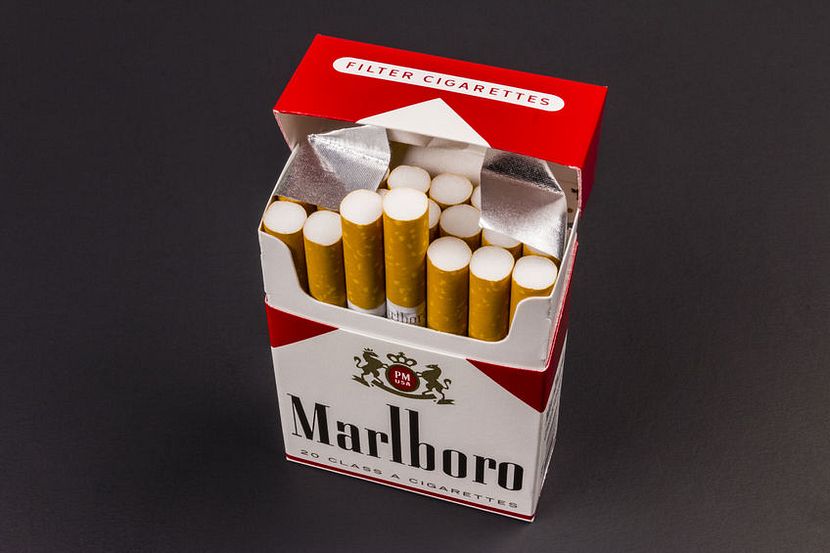
The American Tobacco Company was established in 1890, and started to grow massively in just a few years, mainly by acquiring its competition, which includes its biggest competitor in Lucky Strike. After it acquired more than 200 other companies, anti trust action against the company began in 1907, just 17 years after the founding of the company and ended in 1911, resulting in the breakup of the massive group. Currently, two of the biggest companies in the cigarette industry are British American Tobacco and Phillip Morris International (NYSE:PM), though neither are close to being as big as American Tobacco was in its heyday.
Copyright: jetcityimage / 123RF Stock Photo
3. AT&T
AT&T is the biggest telecommunication company in the world right now, and that is after being broken up by the Supreme Court. Even today, it is the biggest provider of mobile phone and fixed phone services in the United States. AT&T was a subsidiary of the Bell Telephone Company, which was founded by Alexander Graham Bell. However, the company grew to such a significant size that in 1982, there was a United States v AT&T antitrust lawsuit, which resulted in the breakup of the company into smaller parts, including the divesture of what were known as ‘Baby Bells’, which became independent companies. The current AT&T is made up of 10 out of the original 22 Bell Operating Companies.

Ken Wolter / Shutterstock.com
2. Andrew Carnegie’s Steel Company
It is now known as the US Steel Company (NYSE:X) and is the reason behind Andrew Carnegie being the second richest person in history after only J.D. Rockefeller. When his Carnegie Steel Company merged with the Federal Steel Company and the National Steel Company, this resulted in the formation of a major monopoly which in turn became the largest producer of steel in the entire world and absolutely dominated the US steel industry. In fact, it became the first billion dollar company in the entire world, when it was valued at $1.4 billion. A billion dollar corporation is not a big deal in today’s world, but more than a century ago, this was a huge deal. In 1911, the government tried to break the company based on anti-trust laws, but failed initially. It even produced around 60% of the total steel production in the US at the time, though this fell to just 6% in 2001.

bogdanhoda/Shutterstock.com
1. Standard Oil Company
Topping the list of the 12 most famous monopolies of all time is of course, Standard Oil Company by J.D. Rockefeller. The company was involved in the production, transportation, refining and marketing of oil which came into existence in 1870. When it was in existence, it was the largest oil refining company in the world and was also the biggest company in the entire world until its existence came to an abrupt end in 1911, when it was finally broken up by the Supreme Court.
Initially, the company started to become a monopoly through horizontal integration, before engaging in vertical integration and engaging in domination that has been more or less unparalleled since. It was also a pioneer in establishing a trust, which allowed it to lower costs, under cut its competitors and allowed the streamlining of logistics as well as production. Rockefeller became one of the richest people in the world when the Supreme Court broke the company into 34 companies, and is considered to be the richest man in modern history, adjusted for inflation. Just to understand the absolute behemoth that Standard Oil was, some of its 34 successors are still among the biggest oil companies in the world, including Exxon Mobil (NYSE:XOM), Marathon Petroleum (NYSE:MPC) and Chevron (NYSE:CVX).
See also: 15 largest oil companies in the world and 15 largest energy companies in the world
Suggested articles:
This article is originally published at Insider Monkey.