
Monolithic Power Systems, Inc. (NASDAQ:MPWR) lifted its second-quarter operating margin to 31% from 24.8%, while gross margin barely changed. The improvement shows how quickly revenue growth can lift earnings when operating expenses rise more slowly. It also identifies a source of downside if semiconductor demand weakens.
In the July 30 results, revenue increased 47.6% to $980.6 million. GAAP gross margin was 55.2%, compared with 55.1% a year earlier, while operating expenses increased 17.8% to $237.2 million. The company spread those expenses across a much larger sales base.
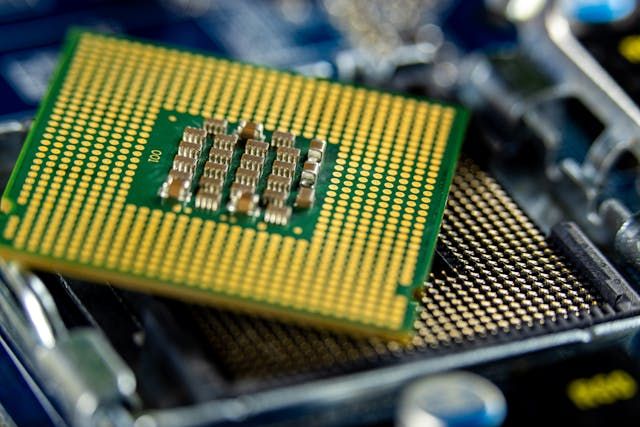
Photo by Sergei Starostin on Pexels
Monolithic Power ranked sixth in our October 6 long-term performance list. Find which five stocks compounded faster over the measured 20-year period, and where other chip businesses finished.
The same cost structure works in both directions
Holding quarterly operating expenses at $237.2 million and gross margin at 55.2%, a 10% revenue decline from the second-quarter level would leave $250.0 million of operating profit. The resulting margin would be 28.3%. This simplified sensitivity excludes any cost response or mix change.
Further growth can support disproportionate profit gains; a sales setback can compress margins even without worse pricing. The model retains GAAP costs, including $53.5 million of stock compensation and related expenses.
There is room for a revenue retreat before the previous year’s operating margin returns, but the buffer is finite. With the same gross margin and expenses, quarterly sales of about $780 million would produce a 24.8% operating margin. That is 20% below the current quarter. If competitive pricing also reduced gross margin, the old profitability level would return sooner.
Revenue quality must support the profit gain
Inventory increased sequentially to $675.8 million from $619.2 million, although inventory days fell. Faster turnover alongside a larger inventory balance is consistent with supporting growth, but neither measure rules out a later customer slowdown.
Operating cash flow of $227.9 million was below the previous quarter’s $250.3 million despite stronger sales. Inventory and receivables require funding as the business scales, so accounting operating leverage does not guarantee equally fast cash growth. A later inventory correction could pressure both sales and the cash tied up in unsold components.
The stock closed October 8 at $1,369.80, equivalent to 65.6 times four times second-quarter GAAP EPS of $5.22. Annualizing one quarter is a reference point, not a full-year forecast or fair-value estimate.
Growing into the valuation requires financing inventory and receivables while retaining the expense discipline that lifted margins. If sales stall, reverse operating leverage could reduce earnings faster than revenue, making the current profit base a poor floor for a valuation model.
Insider Monkey’s database showed 69 hedge-fund holders in Q2 2026, up from 49 in Q1. Millennium Management reported a new position of 136,835 shares. The margin gain becomes more durable if sales growth continues to outrun expenses without weakening gross profitability.


