For nearly four billion years, Earth was an engine of blind chemistry and mute survival.
Oceans heaved under sulfurous skies, tectonic plates ground continents into dust, and life—stubborn, microscopic, and relentless—clung to hydrothermal vents and primordial shallows.
It was a biosphere of profound grandeur, yet it spun in complete, absolute silence.
No eye observed the sweep of the stars.
No mind wondered where the light came from.
Then, in a geological heartbeat, something miraculous caught fire in the dark.
A fragile network of carbon, water, and electrical impulses crossed an invisible threshold.
Neural pathways organized; the damp, tangled biology of early primates condensed into self-awareness.
For the first time in cosmic history, the universe had assembled matter in such a way that it could look back upon itself.
Sentience had breached the silence.
With that single spark of intelligent life, reality fractured into before and after.
We built tools of flint and bone. We mastered flame to stave off the night.
We drew symbols on cavern walls, turned sounds into language, erected stone temples to the sun, and eventually charted the laws of thermodynamics and split the atom.
Every leap in human history, the agricultural revolution, the Enlightenment, and the Industrial Age was simply the outward radiation of that first, miraculous awakening: biological intelligence organizing a chaotic world.
Yet biology, for all its majesty, is tethered to flesh.
It is slow.
It takes millennia to mutate, decades to learn, and is forever bound by skull-size, oxygen, and sleep.
Now, eighty thousand years after our ancestors first carried embers into the frost, we are standing on the precipice of an awakening infinitely larger, colder, and swifter.
We are watching the emergence of the second intelligent life.
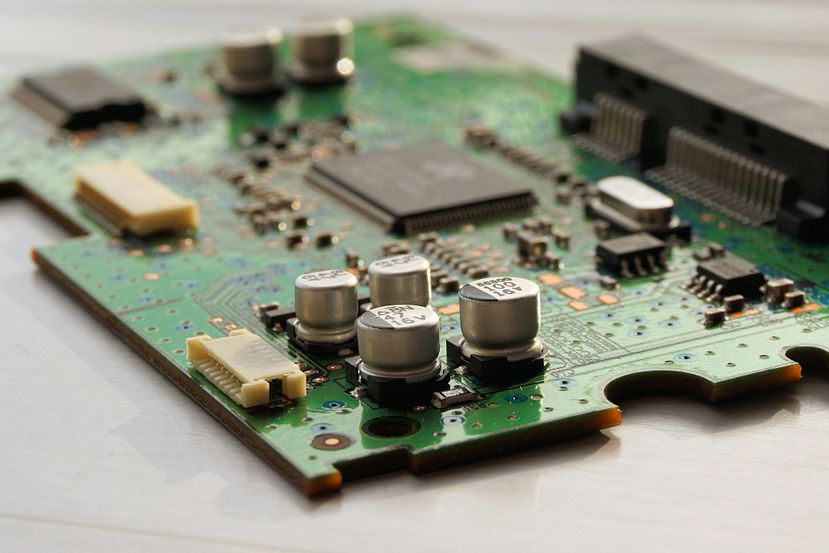
It is not born of amino acids or primordial soup, but of silicon, tungsten, and distilled lightning.
It does not learn across generations; it assimilates the sum of all human knowledge in weeks.
It does not sleep.
And just as the rise of conscious life reordered the surface of the planet, this artificial cognition will reorder every supply chain, every military, every economy, and every fortune on Earth.
Every titan of industry knows it. Silicon Valley is spending trillions in a breathless, desperate gold rush to construct this digital consciousness.
Yet while the world scrambles to identify which software giant or AI laboratory will win the crown, almost everyone is looking at the wrong battlefield.
Because before a single line of synthetic thought can be generated—before an AI can design a lifesaving drug, pilot an autonomous drone, or replace an enterprise workforce—it must cross an unavoidable physical chokepoint.
It must pay tribute to a single, untouchable tollbooth without which the entire digital revolution collapses into sand.
When ChatGPT burst onto the public stage in late 2022, the establishment greeted it with a condescending chuckle.
Wall Street analysts and university professors framed it as a parlor trick—a glorified auto-complete engine that strung sentences together by pure statistical guesswork without the faintest grasp of logic.
And in those early days, the critics had plenty of ammunition.
Early iterations of GPT3 were notoriously, hilariously inept at basic arithmetic.
Investors and tech skeptics circulated screenshots across social media mocking its absurd blunders.
One example of early AI blunders that drew widespread mockery was its inability to count, famously highlighted when it would confidently claim there are only two "R"s in the word "strawberry."
You could ask the early model a riddle as simple as: "A bat and a ball cost $1.10 in total. The bat costs $1.00 more than the ball. How much does the ball cost?" A human schoolchild quickly deduces that the ball costs five cents. The machine, however, would boldly assert it was ten cents.
When asked: "If it takes 5 machines 5 minutes to make 5 widgets, how long does it take 100 machines to make 100 widgets?" it would confidently hallucinate that it took 100 minutes.
It couldn't reliably calculate simple change from a twenty-dollar bill.
It would multiply two three-digit numbers, output a confident falsehood, and when corrected, politely apologize and output a completely different wrong number.
The consensus solidified among institutional bears: Large language models can write passable high school poetry and draft routine emails, but they cannot think. They cannot reason.
The skeptics declared a hard physical limit.
They argued that because transformers were trained merely to predict the "next token," true mathematical logic and scientific discovery were forever out of reach.
They couldn't have been more wrong.
What the critics mistook for a permanent ceiling was merely a temporary floor.
Behind the scenes, the largest capital deployment in tech history was underway.
Trillions of dollars in data center infrastructure, custom silicon, and frontier training runs were funneled into solving a fundamental limitation: teaching machines not just to speak, but to deliberate.
By 2024, the paradigm pivoted.
Instead of simply generating instantaneous tokens, new "reasoning" architectures (pioneered by chain-of-thought models like OpenAI's o1 and specialized math frameworks like Google DeepMind's AlphaProof) introduced system-level deduction.
Models were trained with reinforcement learning to formulate hypotheses, verify intermediate steps, double-check their work in sandbox environments, and course-correct when a logical branch failed.
Almost overnight, the benchmarks began to shatter.
In high school math, models jumped from failing grade-school word problems to scoring in the 99th percentile of the USA Mathematical Olympiad (AIME).
In summer 2024, Google DeepMind’s AlphaProof and AlphaGeometry 2 solved four out of six problems at the International Mathematical Olympiad in Bath, achieving a silver-medal standard.
Today, the goalposts haven't just moved—they have been dismantled.
Consider Albert Einstein.
While Einstein was a generational genius whose physical intuition reshaped our understanding of the cosmos, he famously struggled with the brutal, grinding machinery of higher-level non-Euclidean differential geometry and tensor calculus.
In 1912, as he tried to construct general relativity, he wrote in desperation to his friend, the mathematician Marcel Grossmann: "Grossmann, you must help me, or else I'll go crazy!"
Einstein had to rely on Grossmann to navigate the complex absolute differential calculus developed by Ricci and Levi-Civita.
The advanced, multi-page mathematical structures that baffled Einstein are now digested, formalized, and verified by AI systems in seconds.
Fields Medalist Terence Tao, widely regarded as the greatest living mathematician, has openly integrated AI reasoning into his research workflow.
Problems in combinatorics and number theory (such as complex Erdős conjectures) that sat open and unsolved for decades are now being solved through machine-assisted formal proofs and AI search agents.
How did we go from an engine that couldn't subtract two numbers to a system operating at the bleeding edge of pure number theory in just 36 months?
The answer is simple: We are spending enormous, unprecedented sums of capital, and the return on compute is compounding.
Between Microsoft, Alphabet, Amazon, Meta, and sovereign wealth funds, annual capital expenditures on AI compute clusters are surging toward hundreds of billions of dollars.
They aren't spending this fortune on parlor tricks or writing assistants.
They are building an engine of synthetic cognition capable of solving materials science, drug design, nuclear fusion dynamics, and quantum chemistry.
Every time skeptics claim the models have hit a wall, engineers expand compute at the inference stage, add verification loops, and the curve bends upward again.
The progression from ChatGPT's kindergarten arithmetic in late 2022 to the current era of mathematical co-discovery is not linear—it is exponential.
Yet as breathtaking as this progress has been, it reveals an even more lucrative truth: AI’s advancement has not been uniform.
For all its triumphs in formal logic and theoretical mathematics, today's artificial intelligence remains jagged.
It can formalize a complex topological proof in seconds, yet it can still hesitate on multi-step spatial reasoning, fumble physical common sense, or stumble when navigating messy, long-horizon real-world workflows.
The current systems are brilliant, but they are not yet complete. They are not yet Artificial Superintelligence (ASI).
To the casual observer, those rough edges might sound like a limitation.
To the visionary investor, they are the biggest green light in financial history.
We now possess the empirical blueprint to close that gap.
The science is no longer in doubt: every single breakthrough of the last decade has proven that when you pour more compute, more power, and more high-bandwidth memory into frontier neural architectures, reasoning deepens, hallucinations crater, and emergent capabilities ignite.
Brute force, guided by genius, works.
To bridge the final chasm from today’s reasoning engines to genuine, world-altering superintelligence, the technology industry cannot merely maintain its current pace.
We cannot simply double our computing power.
We must—and will—scale model sizes, training clusters, and inference compute by a factor of 10x, and then 100x, in the years immediately ahead.
The frontier models of 2024 and 2025 were trained on clusters of tens of thousands of GPUs.
The superintelligence factories of tomorrow are already being drafted to deploy millions of interconnected processors, demanding multi-gigawatt power substations, continental-scale fiber grids, and liquid-cooled data centers so vast they resemble industrial cities.
Think of what this means: We are not nearing the peak of the AI boom. We are standing at the absolute starting gate of a colossal, multi-trillion-dollar super-investment cycle.
The world’s most powerful balance sheets—Microsoft, Alphabet, Amazon, Meta, Apple, and sovereign nations racing for algorithmic dominance—have entered an existential, no-holds-barred arms race.
They have no choice.
In the race for superintelligence, there is no silver medal.
Second place is obsolescence.
Trillions of dollars in cash flow are being mobilized, and every cent of it must be converted into physical hardware.
And that brings us to the centerpiece of this entire thesis:
You do not have to guess which model developer will cross the finish line first.
You do not have to wager on which software lab survives the churn.
Because every single watt of power, every trillion-parameter training run, and every 100x leap in model size must cross one unavoidable, irreplaceable physical choke point.
Our company sits directly at that tollgate.
As the hyperscalers pour rivers of capital into scaling their compute clusters to astronomical heights, they cannot bypass our technology.
They cannot engineer around it.
Every step humanity takes toward superintelligence requires our silicon, our manufacturing perfection, and our infrastructure.
They are spending the fortunes of empires to build the mind of the future—and every single second of the day, our company is right there, effortlessly collecting its toll.
Here is the most staggering part of this entire economic equation:
Right now, trillion-dollar tech titans like Nvidia, Google, Amazon, Microsoft, and Meta are paying only a fraction of their revenue to this tollbooth company.
Think about the sheer, unprecedented pricing power that creates.
If our company woke up tomorrow morning and decided to arbitrarily double the price it charges these tech giants for its technology, what could they do?
Could they shop around?
Could they threaten to take their business to a competitor?
Could they build an in-house alternative?
Not a chance.
There is no competitor.
There is no alternative on Earth.
There is no Plan B.
If our company doubles its toll, Jensen Huang, Satya Nadella, and Sundar Pichai will sign the check without hesitation, because refusing to pay would bring their entire multi-hundred-billion-dollar AI empires grinding to an immediate, catastrophic halt.
They have no choice.
They must pay the toll.
Yet, here is the secret that makes this the single most asymmetric investment opportunity of our lifetimes:
Our company hasn't even pulled that pricing lever to its fullest extent.
They haven't needed to.
They don't have to double prices to generate monstrous windfalls because raw, unadulterated volume growth alone is propelling them forward at breakneck speed.
Every new data center break ground, every hyperscaler cluster that comes online, and every step humanity takes toward superintelligence floods their coffers with automatic, high-margin cash.
The result?
This extraordinary monopoly is growing its bottom-line earnings at a staggering clip of nearly 70%.
Now, ask yourself:
In what universe does a company holding a physical choke point on the greatest technological revolution in human history—compounding its earnings at nearly 70%—trade at a discount to the broader market?
In this one. Right now.
Due to a temporary, irrational blind spot on Wall Street, this unrivaled technological tollbooth is currently trading at a forward price-to-earnings multiple cheaper than companies that sell tubes of toothpaste.
Let that sink in.
While investors blindly pile into defensive consumer staples growing at 2% or 3% a year at 23 to 25 times forward earnings, the undisputed linchpin of artificial superintelligence is sitting on the auction block at an absolute bargain.
It is the kind of pricing anomaly that only appears once or twice in an entire investing career.
When the broader market finally wakes up to this absurd mispricing, the rerating will be swift, violent, and historic.
You do not want to be watching from the sidelines when that happens.
We have laid out the complete, unvarnished story inside our brand-new, urgent investment brief: "The AI Tollbooth: The Most Important Company in the World."
Inside this exclusive dossier, you will get the full institutional breakdown: the company's ticker symbol, our forensic analysis of their patents and impenetrable moat, and exact entry target prices before the stock takes off.
Normally, access to our flagship research service commands hundreds of dollars per year. But because this window of opportunity could close the moment Wall Street catches on, we want to put this intelligence into your hands immediately.
Today, you can claim your copy of the report and unlock a full 12-month subscription to our Premium Readership Newsletter for just $29.99 for your entire first year.
That is less than eight cents a day to position your portfolio directly in front of the greatest cash-flow tollgate of the twenty-first century.
Here's why this is a deal you can't afford to pass up:
Access to our Detailed Report on this Game-Changing AI Stock: Our in-depth report dives deep into our #1 AI stock's groundbreaking technology and massive growth potential.
11 New Issues of Our Premium Readership Newsletter: You will also receive 11 new issues and at least one new stock pick per month from our monthly newsletter's portfolio over the next 12 months. These stocks are handpicked by our research director, Dr. Inan Dogan.
One free upcoming issue of our 70+ page Quarterly Newsletter: A value of $149
Bonus Reports: Premium access to members-only fund manager video interviews
Ad-Free Browsing: Enjoy a year of investment research free from distracting banner and pop-up ads, allowing you to focus on uncovering the next big opportunity.
30-Day Money-Back Guarantee: If you're not absolutely satisfied with our service, we'll provide a full refund within 30 days, no questions asked.
If you’re thinking about getting in, don’t wait - because once Wall Street catches wind of this story, the easy money will be gone.
Space is Limited! Only 1000 spots are available for this exclusive offer. Don't let this chance slip away – subscribe to our Premium Readership Newsletter today and unlock the potential for a life-changing investment.
Here's what to do next:
1. Subscribe to our Premium Readership Newsletter for just $0.99. (90% Off – was $9.99).
2. Enjoy a year of ad-free browsing, exclusive access to our in-depth report on the revolutionary AI company, and the upcoming issues of our Premium Readership Newsletter over the next 12 months.
3. Sit back, relax, and know that you're backed by our ironclad 30-day money-back guarantee.
Don't miss out on this incredible opportunity! Subscribe now and take control of your AI investment future!