In this article, we discuss the 12 Cheapest Cigarette Brands in 2026.
The global tobacco industry in 2026 is navigating a complex shift as traditional cigarette volumes decline and major manufacturers rely on aggressive pricing and alternative nicotine products to maintain profit margins. According to a report by news agency Reuters, major tobacco players are facing a challenging operational environment. In January, Marlboro-maker Altria forecast full-year adjusted earnings of $5.56 to $5.72 per share, surpassing Wall Street expectations primarily due to consecutive price hikes across smokeable and oral tobacco portfolios. Despite a 7.9% drop in quarterly cigarette shipment volumes and a patent dispute, Altria successfully used pricing leverage to preserve margins.
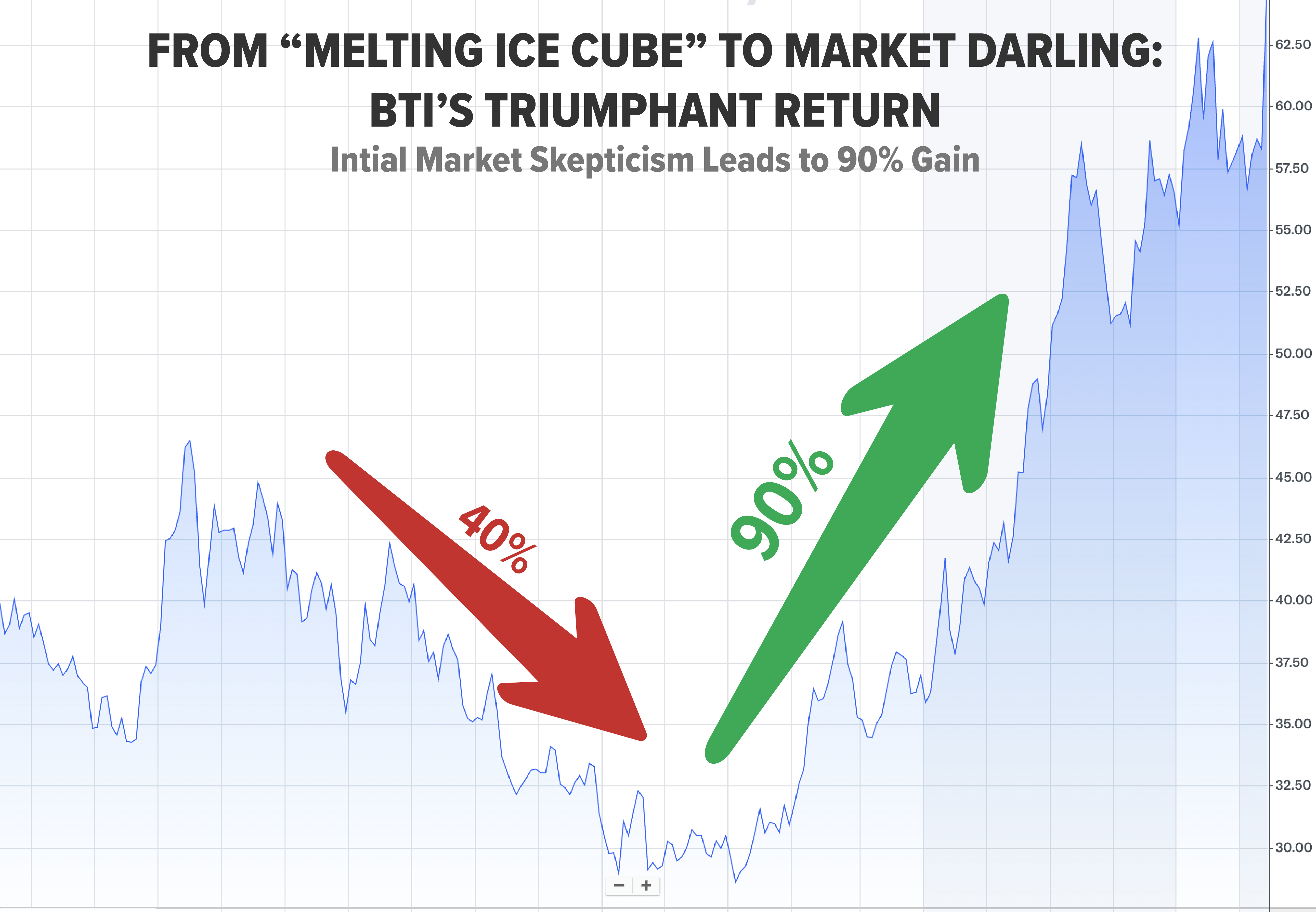
Simultaneously, competitors are encountering a bumpy road. In the full-year earnings report, BTI reported total annual revenue of around $33.60 billion, which reflected a 2.1% increase in organic, constant-currency terms despite a 1% headline slip. While BTI executives highlighted robust pricing gains of 5.7% in the United States and 6.5% in Europe, these increases were offset by ongoing volume declines in combustibles and heavy promotional spending in the Next Generation Product sector. Beyond traditional smokeables, the industry is heavily pivoting toward oral alternatives, sparking a regulatory backlash. Earlier this month, the World Health Organization issued a sharp rebuke regarding the rapid global expansion of the nicotine pouch market, which reached a valuation of nearly $7 billion, accusing tobacco companies of deploying deceptive marketing strategies to hook younger demographics.
News coverage from Reuters indicates that the pressure on consumer disposable income has intensified in recent years. Macroeconomic stressors, including fluctuating gas prices fueled by geopolitical conflicts, have accelerated a trend known as downtrading, where adult smokers actively seek out lower-priced alternatives. This macroeconomic environment has fundamentally reshaped corporate performances. While premium brands have historically dominated the market, they have steadily shed market share to deep-discount and value-tier options. In response to this shifting consumer behavior, major tobacco players have been forced to adjust their portfolios.
READ ALSO: Mark Cuban Stock Portfolio: 8 Best Stocks to Buy.
Financially, this defensive pivot into discount tobacco has yielded surprising resilience. According to LSEG data compiled by Reuters, prioritizing value brands alongside implementing targeted promotions and expanding alternative nicotine segments has allowed companies to beat Wall Street expectations for both revenue and profit. Furthermore, while volume pressures persist across the entire combustible market, the discount tier has proven to be an essential hedge for legacy companies, effectively stabilizing shipments and softening the losses of flagship premium portfolios.
Industry metrics track a stark upward trajectory for budget alternatives. From historical baselines where price-fighting and fourth-tier labels hovered below a 20% footprint, value options have expanded to command roughly 27% to 33% of total retail sales volume in the United States. Macroeconomic tracking illuminates a sharp socioeconomic divide among consumers. Smoking prevalence is deeply stratified by household earnings, sitting at roughly 21% for individuals making under $35,000 annually, compared to just 7% for higher-income earners. This concentration of product usage among economically pressured demographics is the primary driver behind the rapid customer migration to deep-discount alternatives.
Our Methodology
Cigarette prices in the United States vary drastically based on location due to local retail markups and highly divergent state excise taxes. Based on national base-rate wholesale sheets and discount retail inventory tracking, the most consistently affordable deep discount or value tier cigarette brands available in the US feature the following typical price ranges.
Some tobacco stocks are also discussed. Data for the hedge fund sentiment surrounding each stock was taken from Insider Monkey’s Q4 2025 database of 1041 elite hedge funds. Why are we interested in the stocks that hedge funds pile into? The reason is simple: our research has shown that we can outperform the market by imitating the top stock picks of the best hedge funds. Our quarterly newsletter’s strategy selects 14 small-cap and large-cap stocks every quarter and has returned 498.7% since May 2014, beating its benchmark by 303 percentage points (see more details here).

Cheapest Cigarette Brands in 2026
12. Eagle 20’s
Estimated Price Per Pack: $6.50 – $7.30
Vector Tobacco, a manufacturing arm associated with Liggett Vector Brands, produces Eagle 20’s, which ranks as one of the most visible and widely distributed discount brands in the United States. Introduced as a competitor in the value tier, Eagle 20’s are designed to offer an authentic, full-bodied American blend at a highly competitive price. The brand avoids the use of cheap tobacco by-products, relying instead on real sheet leaf to ensure a consistent, reliable taste from pack to pack. It is available in a full matrix of styles, including Kings and 100s in Red, Blue, Orange, and multiple Menthol varieties. Because of Liggett’s extensive retail placement contracts, Eagle 20’s can be found in virtually every major gas station chain nationwide.
11. Wings
Estimated Price Per Pack: $6.40 – $7.20
Wings is a historical discount brand originally introduced to capture price-sensitive consumers during the mid-20th century, now managed under the global portfolio of Japan Tobacco International. It is engineered to provide a reliable, middle-of-the-road smoking experience focusing heavily on standard, smooth blending techniques. The firm leverages international distribution networks to keep inventory costs predictable, allowing Wings to maintain an affordable price point even in changing retail environments. The cigarettes feature a traditional construction with reliable density, avoiding the fast-burning or uneven characteristics sometimes associated with cheaper brands.
10. Echo
Estimated Price Per Pack: $6.20 – $7.00
Echo is another prominent budget brand coming out of Xcaliber International in Oklahoma. Positioned slightly above their ultra-deep-discount options, Echo serves as a sub-value or value-tier cigarette designed for smokers who want an enhanced physical filter and a slightly smoother draw. It benefits from the same 500,000 square-foot advanced manufacturing infrastructure as other Xcaliber products, guaranteeing that every batch meets ISO quality standards. Echo is characterized by its clean burn and neutral aroma, making it an easy transition brand for individuals attempting to cut down their spending from premium labels. It is widely available across the central United States.
9. 305’s
Estimated Price Per Pack: $5.40 – $6.30
A regional powerhouse in the Southeast, 305’s are manufactured by the Dosal Tobacco Corporation based in Miami, Florida. Named after Miami’s famous area code, this brand was created to provide local consumers with an affordable alternative during economic downturns. 305’s utilize a distinct blend that caters well to regional preferences, offering a slightly sweet and robust smoke profile. Dosal’s independent operating model allows it to bypass many of the corporate pricing structures that drive up premium brand costs, keeping 305’s priced firmly in the deep-discount sector. The brand features a wide variety of styles, with its menthol options commanding a highly loyal customer base in coastal and urban markets.
READ ALSO: 10 Stocks That Tanked: Why Larry Robbins’ Top Picks Are Struggling in 2026.
8. Seneca
Estimated Price Per Pack: $5.70 – $6.40
Manufactured by Grand River Enterprises based in Canada and distributed legally across various US channels, Seneca is a highly successful discount brand rooted in indigenous tobacco manufacturing heritage. The brand has built a strong reputation for offering clean, slow-burning cigarettes at a price that significantly undercuts mainstream domestic options. Seneca utilizes a proprietary blend of high-quality tobacco that delivers a distinctively rich flavor. The brand family is extensive, featuring Kings, 100s, and even 120mm lengths, along with a wide spectrum of menthol and non-menthol strengths. By utilizing efficient, large-scale production facilities and focusing on high-volume distribution networks, Seneca keeps its per-pack cost low. It is particularly popular in border states and regions.
7. Wildhorse
Estimated Price Per Pack: $5.50 – $6.20
Wildhorse is produced by Flue-Cured Tobacco Growers, a manufacturer uniquely owned by a cooperative of American tobacco farmers. This close tie to the agricultural supply chain allows the brand to feature high-grade, domestic flue-cured and burley tobacco leaves while completely eliminating middleman sourcing markups. Wildhorse prides itself on providing an authentic American taste that rivals premium heritage brands. It features a straightforward, no-nonsense lineup consisting of Full Flavor, Light, and Menthol styles. Because the profit margins flow back to domestic growers, the brand emphasizes transparency and quality control over high-concept retail promotions. It is a highly popular option in rural and suburban markets throughout the southeastern United States.
6. Aura
Estimated Price Per Pack: $5.40 – $6.10
Aura is a specialized value brand managed by Cheyenne International, notable for offering a slightly more refined flavor profile than ordinary fourth-tier options. It is engineered to capture consumers who want a smooth, light taste experience without paying premium prices. The brand utilizes select tobacco blends and distinct filtration components to achieve a milder draw, separating it from raw, harsh discount brands. Aura is frequently offered in fresh varieties like Sky Blue and dynamic Menthol options like Menthol Glen, which emphasizes a crisp, cool finish. The packaging features modern, minimalist designs that visually elevate it on retail shelves. Despite its upscale look, it remains firmly priced within the discount tier.
While we acknowledge the potential of tobacco stocks to grow, our conviction lies in the belief that some AI stocks hold greater promise for delivering higher returns and have limited downside risk. If you are looking for an AI stock that is more promising than tobacco stocks and that has 100x upside potential, check out our report about the cheapest AI stock.
Click to continue reading and see 5 Cheapest Cigarette Brands in 2026.
READ NEXT: Chris Rokos Stock Portfolio: Top 10 Stock Picks and Growth Stock Portfolio: 12 Stock Picks by Carl C. Icahn.
Disclosure: None. Follow Insider Monkey on Google News.